■개요
-DTD의 단점
: XML형식 아닌 EBNF형식 따름
:재사용성,확장성 떨어짐
:제한적 DATA TYPE 지원
-XML Schema
:markup 언어 및 xml 문서 양식 정의 언어
:data type 이용해서 element 및 속성 정의
:built-in data type 제공
:사용자 정의 data type 제공
:data type 상속 방법 제공
:xml namespace 지원
-XML Schema 이용 xml 문서 작성
:namespace 정의되지 않은 스키마 -> noNamespaceSchemaLocation
:namespace 정의 스키마 -> schemaLocation
■스키마 문서의 구성
– Type definitions(정의)
▪ simple types ▪ complex types
– Declarations(선언)
▪ element ▪ attribute ▪ notation
– Group definitions
▪ model group, attribute group
– Constraint definitions
▪ unique, key, keyref
– Annotations
▶스키마 문서 구조
-<schema> element
:xml schema의 루트 엘리먼트
▶속성
:Namespace 선언 √Target namespace √Default namespace √Namespace prefixes 선언
√Target namespace : 설정할 언어의 namespace 찾기
√Default namespace: 디폴트의 namespace 정함(접두사 붙지 않을 때도 이 디폴트 namespace)
▶<schema>의 자식 element
:외부 xml schema 관련 element ✓<include> ✓<import> ✓<redefine>
:new element 속성,타입 등 선언 element ✓<element>,attribute,simpleType,complexType
✓group,attributeGroup
✓notation,annotation
■<element> 선언
.명시적 정의 -> name || 다른 element 참조 -> ref 속성 이용
.element type 지정
▶ global type || 미리 정의된 타입,type 속성 통해 지정
▶명시적 (local type) ||<simpleType> <complexType> 이용 정의
.빈도수 제한 || minOccurs, maxOccurs (default:1) (maxOccurs:unbounded)//횟수 제한 x
.기본값, 고정값 설정 || default 또는 fixed
.관련 element,attribute 사이 유일성 or 참조 관계 제약 설정 || uniqe,key,keyref
.element 치환 그룹
1.데이터값 갖는 엘리먼트 선언
-element type으로 simple type 사용 || built-in simple type or 사용자 정의 simple type
-빈도수 지정 || minOccurs, maxOccurs 속성 사용
2. 자식 엘리먼트나 속성을 갖는 엘리먼트 선언
- element type으로 complex type 사용 ||
2.1 자식 element만 갖는 elemnet
2.2 속성만 갖는 empty element
2.3 자식 element + 속성 갖는 element
※ 속성 선언은 반드시 자식 element 선언 다음
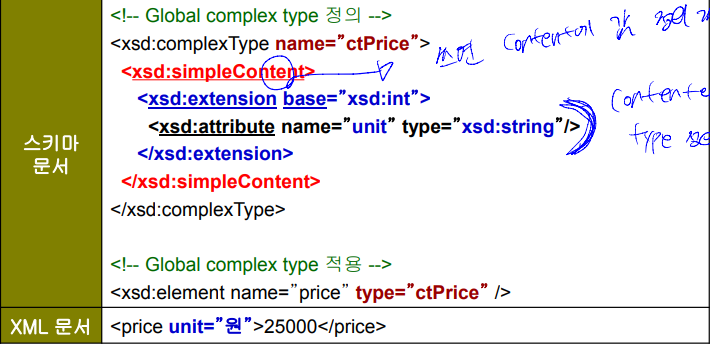
2.4 data값과 속성 갖는 element
▪Complex type ▪ Simple content 및 속성 포함
ex) <xsd:element name="가격"> // 일단 complextype->simpletype->단위에대한 type->속성
<xsd:complexType>
<xsd:simpleType>//데이터값 type
<xsd:extension base="xsd:int">////data 값 type
<속성내용>
</xsd:extenstion>
■ <Attribute> 선언
.name or ref
.type :simple type만 가능
.use || 속성 생략 여부 나타냄 "required" "optional(default)"
.default || 속성 생략 경우 자동적으로 그 값으로 인식
.fixed
▶참 고 ! !
-default
속성 선언 시 || 속성 생략 시 그 속성 default
엘리먼트 선언 시 || 엘리먼트가 empty element -> contemnt에 default 값 가짐
element 자체 생략 -> 그 element 존재 x
-fixed || element,attribute 모두 사용
-빈도수
elment || minoccurs , maxoccurs
attribute || use(0 or 1)
■ global(전역) 선언 vs local(지역) 선언
❑ Global element/attribute declaration
– 엘리먼트의 자식으로 선언
– 전역 선언된 엘리먼트는 XML 문서의 최상위 엘리먼트 (즉, 루트 엘리먼트)로 사용 가능
– 다른 엘리먼트/속성 선언에서 ref 속성을 통해 참조될 수 있음 (재사용 개념)
– minOccurs, maxOccurs, use 속성을 이용한 빈도수 지정 불가
❑ Local element/attribute declaration
– 타입 정의 안에서 선언됨
– 다른 선언에서 참조될 수 없음 (local scope를 가짐)
– minOccurs, maxOccurs, use 속성을 사용하여 빈도수 지정 가능
■ Data Types
? data type
: 엘리먼트의 content 또는 속성의 값으로 어떤 종류(구조)의 정보가 어떤 형태로 작성될 수 있는지 정의
-XML Schema는 다양한 데이터 타입을 제공함으로써 XML 문서의 구조를 더 세밀하게 정의할 수 있음
-XML Schema는 사용자가 새로운 데이터 타입을 정의하는 것을 지원함
☆ dtd -> data type 정확히 표현 x

▶data type의 분류
1. 사용용도
| 종류 | 설명 | 용도 |
| built-in | 정의되어 있는 type | |
| 사용자 정의 simple type | 새로 정의 | 속성 or element content 종류 지정 속성 값 반드시 simple type 엘리먼트 타입 simple type -> data만 갖는 element |
| 사용자 정의 complex type | 새로 정의 | 자식 엘리먼트 또는 속성을 갖는 엘리먼트 선언 시 사용 |
2.정의되는 위치
-Global type -Local type
:schema element 자식으로 선언 :특정 element나 속성 선언 내에 정의
:name 속성 가짐 :name 속성 x
:참조 가능 :참조 불가
■Built-in Simple Type
■Simple Type
형태에 따라
- atomic type(restriction) || built-in type 이나 이미 정의된 simple type 을 제한하여 새로운 simple type 정의
: facets? data type 가질 수 있는 범위 제한 <facetName value="값"/>


-list type || 공백 문자열로 분리된 토큰들의 리스트를 값으로 갖는 타입 정의
.
-union type || 여러 개의 simiple type들을 결합하여 여러 종류의 데이터 값을 갖는 타입 정의
. <union memberTypes="type들의 이름"/>
※ 내부에 다른 element 나 속성 포함할 수 없음
■ Complex Type Definition
:속성이나 자식 element를 갖는 엘리먼트 선언에 필요한 타입
:속성은 complex type 사용 불가
●Global complex type ●Local complex type
:정의 방법
1.Restriction of the un-restricted type(ur-type) :새로 정의 , 순서있는 자식 element들을 갖는 타입정의
▶<sequence/> 자식 element 하나만 있어도 사용
▶<choice/> 자식 element 선택적으로 가질 수 있는 complex type 정의
▶<attribute/> 자식 element와 속성 동시에 갖는 complex type 정의 || sequence choice 다음에 와야함
▶ 속성만 갖는 complex type -->즉,empty element 선언 시에도 complex type 사용
▶ data 및 속성을 동시에 갖는 complex type 정의
[참고]▶ <all /> || 명시된 자식 element들이 순서없이 한번씩만 나타날 수 있음
▶ <xsd:complexType mixed="True"> 혼합형 content 갖는 element type 정의
-자식 element + 문자열 data가 혼합되어 사용가능
▶ 기존 complex type 확장,제한하여 새로운 complex type을 정의할 수 있음(상속 개념)
2.Extension or restriction of a simple content complex type
<simpleContent/> 사용
2-1. Extension
▶ data와 속성을 갖는 simple content complex type의 확장 -> 속성추가 새롭게 정의
▶ <simpleContent/> <extension/>
2-2. Restriction
▶ 기반 complex type의 데이터 값 범위 제한
▶ <simpleContent/> <restriction/>
3.Extenstion or restriction of a complex content complex type
<complexContent/> 사용
3-1. Extension
▶ 새로운 자식 element나 속성을 추가하여 새로운 complex type 정의 || empty element도 확장 가능
3-2. Restriction
▶ 자식 element나 속성에 대해 제한
√ 기반 complex type의 모든 자식 element들을 재선언 해야함
√ 자식 엘리먼트의 타입 변경(제한), 빈도 수 제한, default 값 선언 등 가능
✓ 새로운 자식 엘리먼트를 추가할 수는 없음
✓ 주의: 자식 엘리먼트가 local type으로 선언된 경우 제한 불가
✓ 속성은 제한하고자 하는 속성만 재선언 가능
✓ 속성 값의 제한은 작은 범위로의 제한만 가능
3-3. complex type의 다형성
-element 선언 시:xsi:type속성을 이용하여 다형성을 갖는 complex type을 지정
-xml 문서 작성 시:해당 complex type외에 그것을 확장한 파생 complex type의 엘리먼트 사용가능
■Model Group,Attribute Group
■ Constraints
■ Notation 선언
■ Namespace를 갖는 스키마
■ 스키마 문서의 결합
■Built-in Simple Type
■Simple Type
'XML' 카테고리의 다른 글
| 7.DOM (0) | 2024.04.25 |
|---|---|
| 5.XML Namespaces (0) | 2024.04.12 |
| 4.DTD를 이용한 문서 구조 설계 (0) | 2024.03.31 |
| XML (0) | 2024.03.29 |